Market Mechanics Analysis
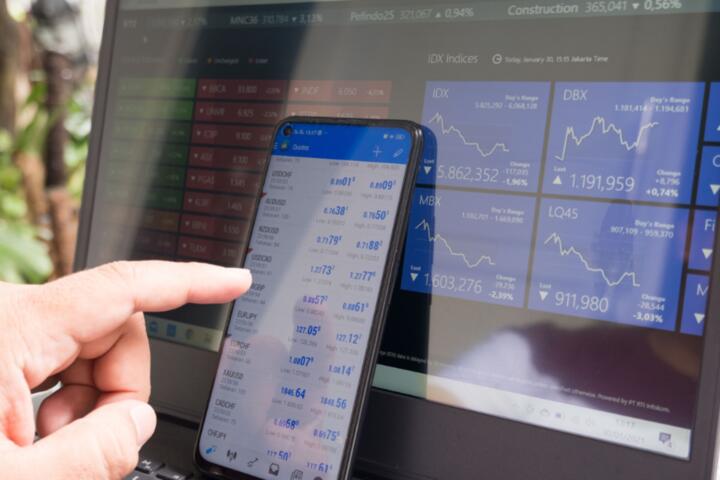
Professional trading is not about predicting the future; it is about managing probabilities based on historical price behavior and mathematical modeling. While retail traders often search for a "holy grail" single indicator, professionals view these tools as filters that validate or invalidate a broader thesis. These indicators measure three core pillars of market health: trend strength, mean reversion, and volatility expansion.
For instance, a hedge fund analyst might use a combination of moving averages and RSI to determine if a stock like NVIDIA is overextended after a 20% rally or if the trend remains intact. Real-world statistics suggest that over 80% of institutional algorithmic trades rely on some form of these technical overlays to trigger execution. In high-frequency environments, even a 0.01 deviation in a standard deviation band can trigger millions of dollars in automated sell orders on platforms like Bloomberg Terminal or Reuters Eikon.
Indicator Integration
A common mistake among developing traders is "indicator redundancy," where multiple tools measuring the same data point (like using RSI, Stochastic, and CCI simultaneously) lead to analysis paralysis. When every indicator provides a slightly different signal, the trader loses the ability to act decisively, often missing the optimal entry or exit point entirely.
The consequences of poor integration are financially devastating. In 2021, many retail investors ignored bearish divergences on the MACD during the late-stage crypto bull run, leading to significant drawdowns when the market corrected. Improperly set volatility bands can also lead to "stop-loss hunting," where a trader’s position is liquidated by a minor price wick just before the market moves in their intended direction. Professional trading requires a lean toolkit where each component serves a distinct, non-overlapping purpose.
Mastering Exponential Moving Averages for Trend Confirmation
The Exponential Moving Average (EMA) is a staple for professionals because it places more weight on recent price data compared to the Simple Moving Average (SMA). This reduced lag makes it superior for fast-moving markets. Traders often focus on the 21-period EMA for short-term momentum and the 200-period EMA for long-term structural health.
In practice, when price remains above a rising 21-EMA, the trend is considered "aggressive." Institutional traders often use these levels to "buy the dip" in an uptrend. For example, during a sustained rally in the S&P 500, a touch of the 21-EMA on a daily chart frequently acts as a catalyst for renewed buying pressure. Utilizing tools like TradingView or MetaTrader 5 allows for the customization of these periods to match specific asset classes.
Utilizing Relative Strength Index for Momentum Divergence
The Relative Strength Index (RSI) is frequently misunderstood as a simple overbought/oversold oscillator. Professionals, however, prioritize "divergence"—where price makes a new high but the RSI makes a lower high. This signal suggests that while the price is rising, the internal momentum is fading, often preceding a trend reversal.
Statistics show that RSI divergences on higher timeframes (4-hour and Daily) have a significantly higher success rate than on 1-minute scalping charts. A reading above 70 doesn't just mean "sell"; in a strong bull market, RSI can stay above 70 for weeks. The professional wait for the RSI to cross back below 70 or show a clear bearish divergence before committing capital to a counter-trend trade.
Implementing Bollinger Bands for Volatility Boundaries
Bollinger Bands consist of a middle SMA and two standard deviation bands. They are essential for identifying "volatility squeezes"—periods where the bands tighten, indicating that a massive breakout is imminent. Professionals use the "Squeeze" tactic to prepare for high-impact moves before they happen, often seen prior to earnings reports or FOMC meetings.
When price touches the outer bands, it represents a statistical extreme (2 standard deviations from the mean). If a trader sees a reversal candlestick pattern at the upper band combined with a high RSI reading, the probability of a mean-reversion trade back to the middle moving average increases to approximately 65-70%. This is a core strategy used by proprietary trading firms like SMB Capital.
Analyzing Volume-Weighted Average Price for Intraday Benchmarking
The Volume-Weighted Average Price (VWAP) is arguably the most important indicator for intraday institutional traders. Unlike standard moving averages, it incorporates volume, showing the true average price paid for an asset throughout the day. If the price is above VWAP, the market is in a bullish regime for that session; if below, the bears are in control.
Institutional buyers often try to execute orders near the VWAP to ensure they aren't overpaying relative to the market average. If a stock gapped up and is holding above VWAP on high volume, it indicates "institutional sponsorship." Traders using platforms like Sierra Chart or Bookmap closely monitor how the price reacts to VWAP to gauge the conviction of large-scale participants.
Applying Moving Average Convergence Divergence for Trend Cycles
The MACD is a trend-following momentum indicator that shows the relationship between two moving averages of a security’s price. The "MACD Histogram" is the professional's favorite part of this tool, as it visualizes the speed of price movement. A shrinking histogram indicates that the current trend is losing steam, even if the price is still moving in the same direction.
When the MACD line crosses the signal line (a "Golden Cross" or "Death Cross" variant), it serves as a confirmation signal. Combining MACD with support and resistance levels provides a robust system. For instance, if price hits a historical support level and the MACD shows a bullish crossover simultaneously, the confluence increases the trade's reliability score significantly.
High-Probability Trading
To succeed, a trader must combine these indicators into a cohesive "Trading Plan." For example, a momentum strategy might involve waiting for a price to break out of a Bollinger Band squeeze, ensuring the RSI is not yet overextended, and verifying that the price is holding above the VWAP. This multi-factor authentication prevents "false breakouts" that trap less experienced participants.
Using professional-grade software like TrendSpider or TC2000 allows traders to scan thousands of stocks for these specific setups instantly. Backtesting data shows that traders who wait for at least three indicators to align (confluence) see a 15-25% increase in their win rate compared to those who trade based on a single signal. Precision is the difference between a gambling habit and a professional business.
2023 Tech Sector Case
In early 2023, many professional desks identified a significant opportunity in the technology sector (QQQ). After a brutal 2022, the price began to stabilize. A specific hedge fund case study showed that by using a combination of the 200-day EMA and RSI divergence, they entered long positions in late January.
The "Problem" was the prevailing bearish sentiment. The "Solution" was the RSI showing a massive bullish divergence on the weekly chart while the price reclaimed the 50-day EMA. By following the technical data rather than the news cycle, the fund captured a 30% move in QQQ over the following six months. Their risk-to-reward ratio was 1:4, meaning for every $1 million risked, they returned $4 million in profit.
| Indicator | Primary Function | Best Timeframe | Institutional Use Case |
|---|---|---|---|
| EMA (21/200) | Trend Identification | Daily / Weekly | Determining long-term bias and dip-buying levels. |
| RSI | Momentum / Divergence | 4-Hour / Daily | Identifying exhaustion in overextended trends. |
| Bollinger Bands | Volatility / Reversion | 1-Hour / Daily | Trading breakouts and mean reversion targets. |
| VWAP | Intraday Benchmark | 5-Minute / 15-Minute | Executing large orders at "fair value." |
| MACD | Trend Cycles | Daily | Confirming entries after a trend change. |
Avoiding Technical Errors
The most frequent error is "Recency Bias," where a trader over-weights the most recent successful trade and ignores the statistical probability of the indicator. Another trap is "Fiddling," which involves changing indicator settings (like moving RSI from 14 to 9) just to force a signal to appear when there isn't one. This is a psychological failure, not a technical one.
To avoid these, keep your charts clean. If you cannot explain why an indicator is on your screen in one sentence, remove it. Furthermore, never use indicators in isolation from price action. An RSI reading of 20 means nothing if a company is going through a bankruptcy proceeding; in that case, the "oversold" signal is a trap. Always check the economic calendar via services like ForexFactory to ensure no major data releases will override your technical setups.
FAQ
Can indicators work on all asset classes?
Yes, these tools are based on price and volume data, which makes them applicable to stocks, forex, crypto, and commodities. However, indicators like VWAP are more effective in centralized markets (stocks/futures) than in decentralized ones (forex).
What is the best indicator for beginners?
The Exponential Moving Average (EMA) is the most intuitive. It clearly shows the direction of the trend and provides a visual guide for where the price is "too expensive" or "a good value" relative to its recent history.
Do professionals really use these "simple" indicators?
Absolutely. Most institutional algorithms use versions of these indicators. The "complexity" comes not from the indicators themselves, but from the risk management and the scale at which the trades are executed.
How many indicators should I have on my chart?
The industry standard is usually 2 or 3. Overcrowding your chart with more than 4 indicators creates conflicting signals and obscures the most important data point: the price itself.
Is technical analysis better than fundamental analysis?
They serve different purposes. Fundamentals tell you "what" to buy (a strong company), while technical indicators tell you "when" to buy it (at the right price/moment).
Author’s Insight
In my twelve years of active market participation, I have learned that the most profitable traders are those who treat indicators as "checks and balances" rather than crystal balls. I personally rely heavily on the 21-EMA and Volume-Weighted Average Price for my intraday entries. My best advice is to master one indicator at a time for three months before adding another. Trading is a game of patience and pattern recognition; the indicators are simply the lens that helps you see those patterns clearly before the rest of the market reacts.
Summary
Success in professional trading requires a disciplined approach to technical indicators, focusing on tools like EMA, RSI, Bollinger Bands, VWAP, and MACD. These instruments provide the necessary data to evaluate trend, momentum, and volatility with surgical precision. To improve your results, focus on indicator confluence, avoid over-complicating your charts, and always prioritize risk management over the signal itself. Start by auditing your current strategy against the tools listed above to identify gaps in your market analysis.