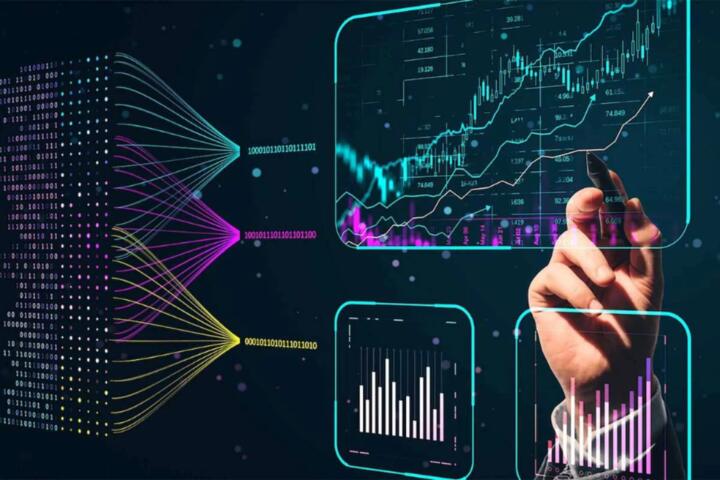
Algorithmic trading is not a black box that prints money — it is an engineering pipeline where most of the failure quietly hides. This guide walks the AI trading stack from market data through signal, execution and risk, explains how connection type and latency decide what a strategy can even attempt, and why metrics that look impressive in research often invert in production. It separates what automation genuinely changes on the trading floor from the marketing built around it.
Browse
All articles
Every guide across the six topics, newest first.

This analysis explores the critical role of psychological market shifts in forecasting macroeconomic trends and corporate performance. It provides financial analysts, CMOs, and policy researchers with a framework for quantifying public perception to anticipate spending shifts before they appear in hard data. By integrating real-time social listening and traditional indices, stakeholders can mitigate the risks of "lagging indicator reliance" and optimize strategic pivoting.

This analysis explores the evolution of the premier decentralized asset as a modern alternative to bullion, specifically for institutional and retail investors seeking to preserve capital. We address the technical and economic mechanisms that support its "hard money" status while providing a roadmap for navigating market volatility. By examining on-chain data and institutional adoption patterns, this guide helps readers move beyond speculation toward a strategic, long-term wealth preservation mindset.

This comprehensive guide outlines a robust asset allocation strategy designed to thrive across all economic environments, including periods of hyperinflation and deep recession. Tailored for private investors and wealth managers, it addresses the fundamental challenge of protecting purchasing power when traditional markets become volatile. By balancing four distinct asset classes, you can mitigate the risk of catastrophic loss while maintaining steady, compounding growth regardless of shifts in central bank policy or global trade.

The evolution of the largest smart-contract ecosystem is currently centered on moving execution away from the congested mainnet to specialized secondary frameworks. This guide provides an in-depth analysis of off-chain scaling architectures for developers, investors, and enterprise architects aiming to reduce overhead while maintaining decentralization. By examining current roll-up metrics and data availability breakthroughs, we explore how modular design is solving the historical trilemma of speed, security, and cost.

You cannot reliably call the top of a market, and trying is exactly how most investors get hurt. This guide reframes the goal: instead of predicting the next bear market, learn to read fragility and dial down risk before it arrives. It walks through the plumbing signals that warn ahead of price — the yield curve, credit spreads and liquidity — using FRED, NY Fed and Shiller data, and shows why positioning is a dial you turn gradually, not a switch you flip at the exact moment of the peak.

Every explainer says DeFi replaces banks by cutting out the middleman — but the half that matters is what you give up. This guide goes function by function through what decentralized finance actually rebuilds: holding money, lending, exchanging and payments, all in open code. Then it names the protections you lose along with the intermediary — insured deposits, reversible payments, someone to call when it breaks — and asks the question most guides skip: when something goes wrong, who carries the risk?

Modern quantitative analysis has moved beyond traditional balance sheets, leveraging massive datasets to predict market shifts with surgical precision. This guide explores how institutional investors and fintech firms integrate non-traditional data—from satellite imagery to social sentiment—to gain a competitive edge. By replacing intuition with high-velocity data processing, financial professionals can mitigate risk and uncover alpha in increasingly volatile global markets.

This analysis explores the intricate relationship between international political friction and the fluctuation of global energy costs, specifically tailored for institutional investors, supply chain managers, and policy analysts. We examine how regional conflicts and diplomatic sanctions disrupt established trade routes, forcing a shift from efficiency-based logistics to security-centric procurement. By understanding these structural stressors, stakeholders can better implement hedging strategies and diversify their energy portfolios against unavoidable systemic shocks.

Negotiating a reduction in borrowing costs is a critical financial lever for both individuals and small business owners facing mounting debt or high-interest environments. This guide provides a strategic roadmap for approaching institutional lenders to secure more favorable terms through data-backed leverage and competitive benchmarking. By understanding the internal metrics banks use to assess risk, borrowers can effectively pivot from passive payers to active negotiators, potentially saving thousands in annual interest expenses.
Educational content only. Nothing on this site is personal financial, investment, tax or legal advice.