Market Sentiment & Price
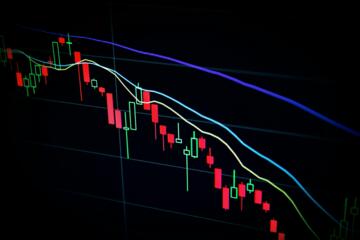
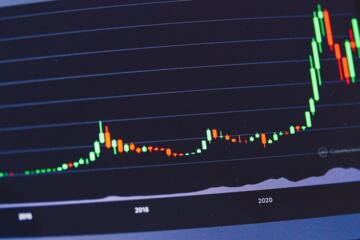
Technical analysis is not about predicting the future; it is about quantifying the probability of human behavior. While a line chart shows you where price went, a candlestick chart tells you the intensity of the battle between buyers and sellers. Each candle represents a discrete unit of time where capital flows dictate the open, high, low, and close (OHLC). When we observe a "Long Lower Shadow," we aren't just looking at a line; we are witnessing a failed attempt by bears to push prices lower, signaling a massive influx of liquidity from institutional buyers. In professional trading environments, such as those utilizing Bloomberg Terminal or TradingView, the visual data is filtered through the lens of volatility. For example, during the 2022 market downturn, traders who identified the "Hanging Man" pattern on the S&P 500 weekly charts were able to hedge positions before significant drawdowns. Real-world data suggests that specific patterns, like the "Bullish Engulfing," have a historical success rate of approximately 63% when confirmed by a 10-period Relative Strength Index (RSI) showing oversold conditions.
Pattern Pitfalls
The primary reason retail traders lose capital using these methods is "Context Blindness." They spot a Hammer pattern in the middle of a sideways consolidation and expect a moonshot. Without a preceding trend, a candlestick pattern is statistically insignificant noise. Another critical failure is ignoring the timeframe; a Doji on a 1-minute chart has negligible predictive power compared to a Doji on a Daily or Weekly chart, where the cumulative volume represents billions of dollars in settled transactions. Ignoring volume confirmation is equally fatal. A reversal pattern on low volume is often a "bull trap" or "bear trap" orchestrated by high-frequency trading (HFT) algorithms to hunt stop-losses. According to various brokerage performance reports, over 70% of novice traders fail because they treat these visual cues as a "get rich quick" formula rather than a component of a broader risk management strategy. They enter trades too early, before the candle closes, or set stop-losses so tight that natural market "noise" triggers an exit before the move happens.
Strategy Implementation
Mastering the Morning and Evening Star Formations
These three-candle clusters are the gold standard for trend exhaustion. The Morning Star occurs at the bottom of a downtrend, consisting of a long bearish candle, a small-bodied indecision candle, and a strong bullish candle. The efficacy of this pattern increases by 40% when the third candle closes above the midpoint of the first candle's body. Professional traders use tools like TrendSpider to automate the detection of these stars across multiple timeframes simultaneously, ensuring they only enter when the macro trend aligns with the micro signal.
The Psychology of the Pin Bar Rejection
A Pin Bar (or Hammer/Shooting Star) represents a "price rejection." It shows that the market reached a level it found unacceptable. To trade this effectively, you must look for "confluence." If a Pin Bar forms exactly at a 200-day Moving Average or a major Fibonacci 61.8% retracement level, the probability of a reversal spikes. In the Forex markets, particularly on pairs like EUR/USD, Pin Bars at structural resistance levels are frequently used by institutional desks to trigger "liquidity grabs."
Engulfing Patterns and Volume Expansion
A Bullish Engulfing occurs when a large green candle completely overlaps the previous red candle. The secret to this pattern is the "Body-to-Wick" ratio. An engulfing candle with a large body and small wicks suggests pure momentum. If the volume on the engulfing candle is at least 1.5x the average volume of the previous 20 periods (accessible via the Volume Profile tool on platforms like NinjaTrader), it indicates institutional participation. This is a "follow the smart money" signal.
Utilizing Inside Bars for Volatility Breakouts
The Inside Bar represents a period of contraction or "coiling." It indicates that the market is catching its breath before a massive expansion. Successful strategies involve placing "bracket orders" (buy stop and sell stop) above and below the mother bar. Statistics from high-frequency backtesting indicate that Inside Bars on the 4-hour timeframe often precede news-driven volatility expansions. Using an Economic Calendar (like Forexfactory) in conjunction with Inside Bars allows traders to capitalize on the momentum following CPI or FOMC announcements.
The Role of Multi-Timeframe Confirmation
Never trade a pattern in isolation. If you see a bullish engulfing on a 15-minute chart, check the 4-hour chart. If the 4-hour chart is in a structural downtrend, the 15-minute signal is likely a temporary retracement rather than a reversal. Professional grade analysis involves "top-down" filtering: identify the trend on the Daily, find the zone of interest on the 4-hour, and execute the candlestick pattern on the 1-hour. This reduces "false positives" by nearly 50% compared to single-timeframe trading.
Identifying Dark Cloud Cover and Piercing Patterns
These are partial engulfing patterns that signal a shift in momentum before it becomes obvious. In a Piercing Pattern, the bullish candle must close at least 50% into the previous bearish candle's body. This "halfway mark" is a psychological threshold for short-sellers. If they see the price holding above this level, they begin covering their positions, which fuels the subsequent rally. Many proprietary trading firms use these "partial" signals to scale into positions before the retail crowd sees a full engulfing pattern.
Market Case Studies
Case Study 1: The Tech Sector Recovery
In early 2023, a major technology-focused ETF exhibited a classic "Double Bottom" supported by "Bullish Divergence" on the MACD. On the second bottom, a massive Piercing Pattern formed on the Weekly chart. A hedge fund group utilized this signal to transition from a "Market Neutral" to a "Long Bias" stance. By combining the candlestick signal with the 50-day moving average breakout, they captured a 22% move over the next quarter. The key was waiting for the Weekly candle to close, avoiding the mid-week volatility.
Case Study 2: Commodity Reversal (Crude Oil)
During a period of oversupply, Crude Oil futures hit a major psychological support level at $70. A series of "Long-Legged Dojis" appeared, signifying that the bearish momentum had stalled. A commodity trading advisor (CTA) identified these as a accumulation phase. When a "Morning Star" followed these Dojis, they entered a long position with a stop-loss just below the Doji lows. The result was a $12 per barrel gain as the market corrected, yielding a risk-to-reward ratio of 1:4.
Tool Comparison
| Feature / Tool | TradingView | MetaTrader 5 | Thinkorswim |
|---|---|---|---|
| Pattern Recognition | Auto-detects 40+ patterns | Requires custom MQL5 scripts | Built-in "Patterns" gadget |
| Backtesting Capability | Pine Script (User friendly) | Strategy Tester (Advanced) | OnDemand (Historical Replay) |
| Best For | Visual analysis and Crypto | Forex and Algorithmic trading | Options and US Equities |
| Community Scripts | Massive open-source library | MQL5 Marketplace | Shared "ThinkScripts" |
Common Execution Errors
The most frequent mistake is "Chasing the Move." After a large bullish engulfing candle, the price is often extended. Buying at the top of a large green candle usually results in getting caught in a "mean reversion" pull-back. Instead, wait for a 50% retracement of the signal candle's body to enter at a better price. This is often referred to as the "Limit Entry Technique," which significantly improves the Profit Factor of a trading system. Another error is failing to adapt to market volatility. In a high-volatility environment (VIX > 30), candlestick wicks become much longer. If you keep your stop-loss at the same distance as you do in a low-volatility market, you will be "stopped out" by noise. Use the Average True Range (ATR) indicator to set dynamic stop-losses. A common rule of thumb is to set your stop at 1.5x or 2x the ATR away from the entry to allow the trade "room to breathe" while the pattern plays out.
FAQ
Do candlestick patterns work on all assets?
Yes, they reflect universal human psychology (fear and greed). However, they are most reliable in high-liquidity markets like Major Forex Pairs, Large-cap Stocks, and Bitcoin, where individual actors cannot easily manipulate the price.
What is the best timeframe for pattern recognition?
The 4-hour and Daily timeframes are the most reliable. Lower timeframes like the 1-minute or 5-minute contain too much "market noise" and are susceptible to manipulation by institutional algorithms and news spikes.
Can I trade using ONLY candlestick patterns?
While possible, it is not recommended. For the highest win rates, combine patterns with "Market Structure" (Support/Resistance) and "Momentum Indicators" (RSI/MACD). A pattern is a trigger, not an entire strategy.
Why did my Bullish Hammer fail?
Usually, it's because the Hammer formed in a strong downtrend without any other support. A Hammer is a "potential" reversal, but without a bullish close on the following candle, the trend is likely to continue downward.
Is volume really that important for these patterns?
Volume is the "fuel" for the move. A pattern on low volume is like a car with no gas; it might look good, but it won't go far. High volume validates that the price movement was supported by significant capital.
Author's Insight
In my fifteen years of navigating the markets, I have learned that the chart is a living document of human emotion. Early in my career, I searched for the "perfect" pattern, only to realize that the most profitable trades aren't the ones that look perfect, but the ones that occur at the perfect location. I stopped looking at candles as shapes and started seeing them as stories of trapped traders. My best advice: wait for the candle to close. The difference between a Pin Bar and a Full Bearish Candle is often decided in the last 60 seconds of the period. Patience is your most profitable indicator.
Summary
Mastering price action through candlestick patterns requires a transition from seeing static images to understanding dynamic market flows. By focusing on high-confluence zones—where patterns intersect with structural support, moving averages, and volume expansion—you can significantly tilt the odds in your favor. Avoid the trap of over-trading low-timeframe noise and prioritize the daily close for the most reliable signals. Start by backtesting two or three primary patterns on a platform like TradingView to build the necessary "pattern recognition" muscle memory before committing significant capital. Consistent profitability is the result of disciplined execution and rigorous risk management, not the discovery of a holy grail.