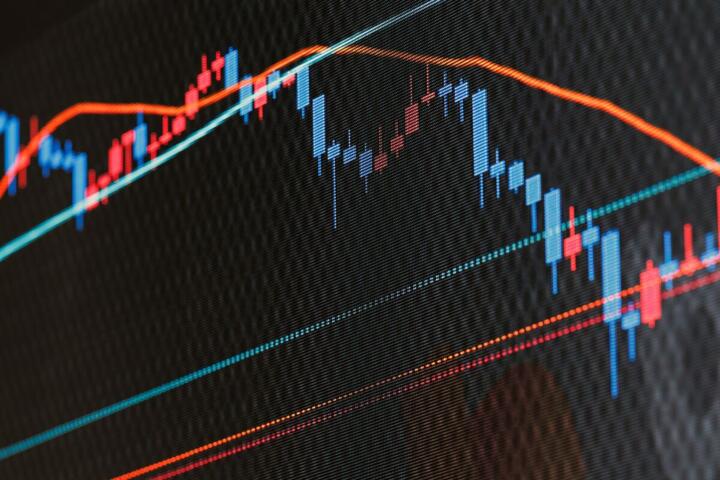
Market Maturity Evolution
For years, the digital asset ecosystem was defined by "wild west" volatility, primarily driven by retail sentiment and high-leverage liquidations on offshore exchanges. The entry of major players like BlackRock, Fidelity, and Franklin Templeton has fundamentally altered this landscape. These entities do not trade based on social media hype; they operate through algorithmic execution, TWAP (Time-Weighted Average Price) orders, and rigorous risk management frameworks.
A primary example is the launch of Spot Bitcoin ETFs in early 2024. Before these instruments existed, a 500 million dollar buy order could cause a massive "slippage" or price spike. Today, with the integration of institutional-grade liquidity providers like Coinbase Prime and Cumberland, the market absorbs such volume with significantly less turbulence. Real-world data from late 2024 showed that even during periods of macroeconomic uncertainty, the "realized volatility" of Bitcoin touched lows near 40%, a stark contrast to the 100%+ levels seen in 2017 or 2021.
Transition Pain Points
Despite the promise of stability, the "institutionalization" phase brings specific challenges. Many market participants still rely on outdated retail metrics, failing to account for the impact of the CME (Chicago Mercantile Exchange) futures gap or the influence of basis trading. When institutions hedge their spot positions by shorting futures, it creates a neutral price pressure that retail traders often misinterpret as bearish momentum, leading to "false-flag" sell-offs.
Another issue is the "Correlation Trap." As digital assets become a line item in diversified portfolios alongside the S&P 500 or Nasdaq 100, they lose their status as "uncorrelated hedges." During liquidity crunches (like the banking crisis in early 2023), institutions sell their most liquid winners to cover margins elsewhere. This leads to paradoxical situations where "digital gold" drops in price exactly when a hedge is needed most, catching unprepared investors off guard.
The Mismanagement of Custodial Risk and Liquidity Fragmenting
Many firms still fragment their liquidity across too many venues without using an Aggregated Order Book. This leads to inefficient execution where a single large trade triggers a cascade of stop-losses on smaller exchanges. Proper institutional setups now utilize Prime Brokerages to unify these pools and prevent localized volatility spikes.
Over-Reliance on High-Frequency Algorithmic Triggers
Institutional bots often react to the same macro data points (CPI, FOMC minutes). When dozens of multi-billion dollar funds have their algorithms tuned to the same "risk-off" parameters, it creates a "flash crash" effect. The volatility isn't gone; it has simply become more compressed and faster, making manual reaction nearly impossible for the average participant.
Failure to Distinguish Between 'Sticky' and 'Hot' Institutional Capital
Not all institutional money is the same. Pension funds and insurance companies represent "sticky" capital with long-term horizons, while multi-strategy hedge funds provide "hot" capital. Market participants often fail to analyze the *source* of the inflow, leading to surprise when a hedge fund rotates out of a position, causing a sudden 5-10% drawdown in a seemingly "stable" asset.
The Complexity of On-Chain vs. Off-Chain Price Discovery
Price discovery is increasingly moving to regulated wrappers like ETFs and CME futures. When the "paper" market moves significantly away from the "on-chain" spot price, it creates massive arbitrage opportunities. If not managed via sophisticated cross-exchange bots, these gaps create artificial volatility as the market forces a violent convergence.
Neglecting the Impact of Regulatory Reporting Cycles
Institutional cycles are dictated by quarterly reporting (13F filings) and tax-loss harvesting. Many observers ignore these calendar-driven events, attributing price movements to "market sentiment" when, in reality, it is simply a large fund rebalancing its risk parity model. This lack of awareness leads to poor entry and exit timing.
Strategic Solutions
To thrive in this environment, one must adopt the tools of the professionals. Using Bloomberg Terminal-style data feeds or platforms like Glassnode and CryptoQuant allows for the monitoring of "Whale" movements and exchange inflows/outflows. Stability is achieved not by avoiding volatility, but by pricing it correctly using the Implied Volatility (IV) surface found on options platforms like Deribit.
Institutional stability works because it introduces "Delta-Neutral" strategies. For example, a fund might hold 1,000 BTC but sell an equivalent amount of call options (Covered Call strategy). This provides a yield that offsets downward price movement, effectively dampening the "pain" of a correction. For a portfolio manager, implementing a "Rebalancing Trigger" at 5% deviations rather than fixed time intervals can capture the benefits of volatility while maintaining a steady risk profile.
Leveraging tools like FalconX or Talos for trade execution ensures that orders are broken down into thousands of "child orders" spread across time and venues. This prevents the market from "front-running" the trade. Statistically, firms using Prime Brokerage services see a 15-20% reduction in execution costs compared to those using standard exchange interfaces. This efficiency is exactly what reduces the "jerkiness" of price charts over time.
Market Transformation
Case Study 1: The Corporate Treasury Shift
Entity: A major business intelligence firm (MicroStrategy style model).
Problem: Holding massive cash reserves (USD) during high inflation, facing purchasing power erosion.
Action: Adopted a long-term "Bitcoin Standard," purchasing over 200,000 BTC using a combination of cash flow and convertible debt.
Result: While the company's stock experienced high volatility, the actual market impact of their purchases was minimized through the use of Coinbase Prime’s execution algorithms. By signaling a "never sell" intent, they created a supply sink that has effectively raised the "price floor" of the asset, contributing to long-term volatility dampening.
Case Study 2: The Pension Fund Integration
Entity: State of Wisconsin Investment Board.
Problem: Seeking diversified growth in a stagnant bond market.
Action: Allocated approximately $160 million into Spot Bitcoin ETFs.
Result: This entry signaled to other state-level entities that the asset class was "safe." The result was a steady, non-speculative inflow. Unlike retail buyers who panic-sell during 10% dips, this institutional capital remained unmoved during the summer 2024 corrections, acting as a "volatility sponge" that prevented a deeper market capitulation.
Market Dynamics
| Feature | Retail-Dominated Era (Pre-2020) | Institutional Era (2024+) |
|---|---|---|
| Primary Driver | Social Media / Hype | Macro Data / Fed Policy |
| Average Hold Time | Short (Weeks/Months) | Long (Years/Cycles) |
| Execution Method | Market Orders (High Impact) | VWAP/TWAP Algos (Low Impact) |
| Volatility Profile | Erratic, 80-100% Annualized | Structural, 30-50% Annualized |
| Leverage Source | Offshore Perp Swaps (100x) | CME Futures / Options (2-5x) |
New Era Common Pitfalls
The biggest mistake is "trading against the trend of professionalization." Many traders still use technical analysis patterns from 2017 that no longer work because the liquidity depth has changed. For example, "stop-hunting" is now performed by sophisticated AI bots that can detect clusters of retail orders with high precision. To avoid this, move your stop-losses outside of "obvious" psychological levels like $60,000 or $70,000.
Another error is ignoring the "ETF Flow" data. Every trading day at 4:00 PM EST, the market reacts to the net inflows or outflows of the spot ETFs. Failing to check the Farside Investors data or similar tracking tools before placing a trade is a recipe for disaster. If the ETFs show three consecutive days of outflows, the probability of a "volatility spike" to the downside increases by nearly 65%, regardless of what the "charts" say.
FAQ
Does institutional adoption mean the 'moon shots' are over?
Not necessarily, but the "100x in a month" moves for large-cap assets are becoming rare. Institutions bring "efficient pricing," which means the asset reaches its fair value faster and stays there longer. Growth becomes more linear and less parabolic.
Why did volatility increase when ETFs were first approved?
This was a "sell the news" event combined with the unwinding of the Grayscale Bitcoin Trust (GBTC). It was a temporary structural rebalancing. Once the "old" expensive shares were swapped for "new" cheap ETF shares, the volatility subsided significantly.
How do I track what institutions are doing?
The most reliable way is monitoring the CME Commitment of Traders (COT) report. It shows whether "Commercial" (big banks/hedgers) or "Non-Commercial" (speculators) players are increasing their long or short positions.
Are institutions safer than retail exchanges?
In terms of counterparty risk, yes. Using a regulated custodian like BNY Mellon or State Street (which are exploring these services) offers much higher protection than keeping funds on a small, unregulated offshore platform.
Will Bitcoin eventually become as stable as Gold?
Current trends suggest it is on that path. Gold’s volatility decreased significantly after the launch of the GLD ETF in 2004. Bitcoin is following a similar "volatility decay" curve as its market cap grows and its holder base diversifies.
Author’s Insight
In my decade of observing digital markets, the shift we are seeing today is the most profound structural change yet. I remember when a single "tweet" could move the market by 20%; now, it takes a change in the Federal Reserve's dot plot to cause that kind of movement. My advice to anyone navigating this space is to stop looking at 15-minute charts and start looking at the 10-year Treasury yield and the DXY (Dollar Index). The "crypto" market is no longer a vacuum; it is a macro asset, and treating it as such is the only way to survive the volatility that remains.
Summary
The impact of institutional adoption is a double-edged sword: it provides the liquidity necessary for global scale and price floor stability, but it also ties digital assets to the broader financial system's stresses. To succeed, investors must move away from speculative "gambling" and toward systematic "positioning." Focus on total cost of execution, monitor institutional flow data via CME and ETF reports, and prioritize assets with high institutional "stickiness." The days of extreme, unprovoked volatility are fading, replaced by a sophisticated, macro-driven market that rewards patience and data-driven strategy over retail-style emotional trading.