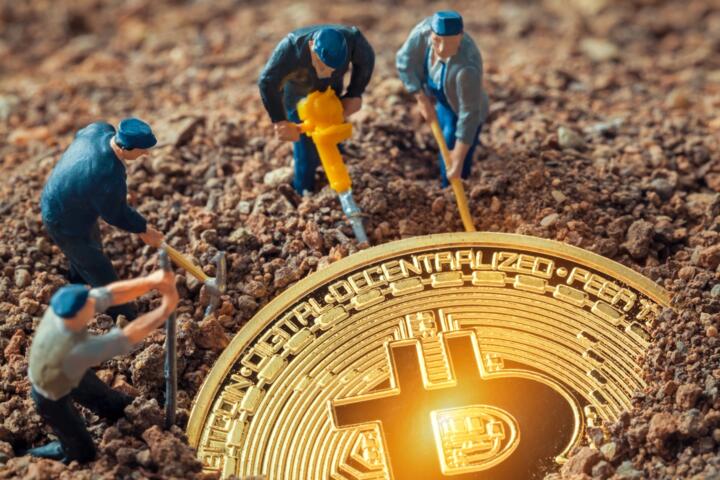
Mining Versus Staking
Mining and staking both aim to earn rewards tied to blockchain networks, but they do it through different mechanisms and different risk profiles. Mining typically appears on proof-of-work networks, where participants compete to solve computational puzzles and earn block rewards plus transaction fees. Staking typically appears on proof-of-stake networks, where participants lock up tokens and earn rewards for helping validate blocks. The reward timing, operational requirements, and failure modes differ enough that a direct comparison needs more than a single “which is better” question.
In mining, the main cost driver is electricity and hardware efficiency, because the network rewards the first valid solution found by miners. In staking, the main cost driver is capital lockup and the risk of penalties such as slashing, because validators can lose part of their stake for misbehavior or prolonged downtime. Even when both methods produce “yield,” the underlying economics behave differently during market downturns, network congestion, and hardware or uptime changes.
As a concrete example, a miner’s output depends on hashrate and the network’s total hashrate, while a staker’s output depends on the amount staked, validator performance, and the network’s reward schedule. A miner can often switch off hardware quickly, while a staker may face an unbonding period before funds become liquid. Those mechanics shape how each method responds to personal cash-flow needs.
Main Pain Points And Errors
People often compare mining and staking using the same mental model: “both earn passive income.” That framing breaks down because mining rewards depend on probabilistic block discovery and ongoing operational costs, while staking rewards depend on validator duties and protocol-defined penalties. Another common mistake treats “APY” as a stable promise, even though both mining profitability and staking yields can change with network difficulty, token price, fee levels, and governance updates.
Mining also gets misunderstood as purely “buy hardware and wait.” In practice, profitability depends on power price, cooling, downtime, and pool fees, and the network difficulty adjusts over time. If you mine solo, your expected time to find a block can be long enough that variance dominates outcomes; if you mine via a pool, you trade variance for pool fee structure and payout rules. A miner who ignores these details can end up with a negative margin after electricity and maintenance.
Staking gets misunderstood as “lock tokens and never worry.” Validator operations involve uptime targets, correct configuration, and monitoring, and many networks punish validators for downtime. Delegated staking through a staking provider reduces operational burden, but it introduces counterparty risk and provider-specific terms, which can include commission rates and withdrawal handling. Slashing rules vary by chain, and some penalties trigger on specific faults rather than generic “bad luck.”
Both methods depend on supporting technologies that readers rarely track. Mining relies on ASIC or GPU hardware, firmware, mining software, pool infrastructure, and power delivery. Staking relies on node software, consensus participation, key management, and sometimes smart-contract-based delegation. When those dependencies fail, the reward story changes quickly, and the chain’s protocol rules determine whether losses are limited to missed rewards or extend to stake penalties.
How To Choose And Act
Model Costs And Reward Variance
Start by separating gross rewards from net outcomes. For mining, estimate monthly electricity cost using your local kWh rate and the miner’s real power draw under load, then subtract pool fees and any hosting or maintenance costs. For staking, estimate net yield after validator or provider commission, then account for the unbonding period that delays liquidity. If you want a practical number, build a simple spreadsheet that uses conservative assumptions for token price and fee levels, because both methods can look profitable on paper and fail after costs.
A small aside from common tooling: many miners track performance using dashboards such as Braiins OS+ or vendor firmware metrics, and those readings can differ from marketing specs by a few percent. That gap matters when margins are thin. If you stake through a wallet interface, check the displayed “estimated rewards” against the chain’s actual reward distribution cadence; some UIs smooth estimates and hide variability.
Match Liquidity Needs To Lockups
Mining often offers faster operational control: you can shut down hardware, though you still bear sunk costs and may face pool payout timing. Staking typically includes an unbonding or withdrawal delay, which can range from minutes to weeks depending on the network. If you might need funds during a downturn, staking can force you to wait for the lockup to end, and the market price can move while your tokens remain illiquid.
Delegated staking can reduce technical work, but it does not remove protocol lockups. Some providers also impose their own withdrawal queues, which can add extra delay beyond the chain’s unbonding window. Reading the provider’s terms matters because “withdrawal available” in a UI can still depend on internal processing.
Assess Slashing And Downtime Risk
Staking risk centers on slashing and missed duties. Slashing conditions differ by chain, but they often relate to double-signing, invalid blocks, or prolonged downtime beyond a tolerated threshold. Before staking, review the chain’s documentation for validator penalties and the network’s downtime tolerance, then compare that with your ability to maintain stable uptime.
If you run your own validator, plan for redundancy such as reliable power, stable internet, and automated monitoring. If you delegate, evaluate the provider’s track record for uptime and how they handle key custody. A mild frustration many users share: documentation often describes slashing in protocol terms, while the UI shows only “estimated rewards,” so you must translate protocol rules into real-world operational expectations.
Use Security Practices For Keys
Mining usually involves managing wallet addresses and pool credentials, while staking involves private keys that control validator identity. Key compromise can lead to loss of stake or inability to withdraw, depending on the chain and custody model. Use hardware wallets where supported, enable withdrawal whitelists if the chain or provider supports them, and avoid reusing keys across unrelated services.
For delegated staking, confirm whether the provider uses your keys or their own custody. On some networks, staking can be done via smart contracts or validator registration flows, and the custody model changes the threat surface. A practical check: verify the withdrawal address behavior in the wallet before delegating, because some interfaces route rewards to one address and principal to another.
Case Examples With Realistic Constraints
Scenario A: Home Miner With High Power Costs
A reader in a region with electricity around $0.25 per kWh buys a used ASIC and joins a mining pool. They estimate the miner’s real power draw at 3,000 W from a wall-meter reading, not the listing. After subtracting electricity, pool fees, and a modest allowance for cooling, the monthly net profit turns out to be near zero during a period of higher network difficulty. When they later travel for two weeks, they shut down the rig, and the missed time reduces expected earnings more than they expected because payouts depend on pool shares and payout schedules.
Scenario B: Delegated Staking With Withdrawal Delay
Another reader stakes via a wallet that delegates to a validator set. They receive reward estimates that look steady, but the chain’s unbonding period is 21 days, so they cannot access principal during a sudden price drop. The validator they delegated to experiences a short outage; the reader notices reduced rewards rather than an immediate penalty, which matches a “missed duties” outcome rather than slashing. When they later switch validators, they learn that redelegation can reset some reward accounting and that transaction fees apply to each move.
Comparison Checklist For Decisions
| Decision Factor | Mining (Proof-of-Work) | Staking (Proof-of-Stake) | What To Check First |
|---|---|---|---|
| Primary Cost | Electricity + hardware + cooling | Capital lockup + provider/commission | Your kWh rate or your liquidity needs |
| Reward Driver | Block discovery probability + fees | Validator performance + protocol rewards | Network difficulty or validator uptime rules |
| Variance | High without pools; reduced with pools | Lower day-to-day variance, but penalties exist | Pool payout method or slashing conditions |
| Liquidity | Often faster to stop mining; hardware remains | Unbonding/withdrawal delay for principal | Unbonding time and any provider queues |
| Failure Mode | Power loss, overheating, downtime | Missed duties or slashing for faults | Downtime tolerance and penalty triggers |
Step-by-step checklist: (1) Choose the network and confirm whether it uses proof-of-work or proof-of-stake. (2) Estimate net returns using your real costs and conservative reward assumptions. (3) Check lockup and penalty rules from the chain’s documentation. (4) Decide whether you will operate infrastructure or delegate, then review custody and withdrawal terms. (5) Start small enough that a bad month does not force you into rushed decisions.
Common Mistakes To Avoid
One mistake involves using a single profitability calculator without validating inputs. Mining calculators often assume a fixed power draw and ignore your actual kWh rate, cooling losses, and downtime. Staking calculators often assume stable validator performance and ignore commission changes or network reward schedule updates.
Another mistake is confusing “rewards” with “profit.” Both mining and staking rewards can be denominated in tokens whose market price fluctuates, so net profit depends on token price movements relative to your costs. If you mine and then hold the mined tokens, your outcome depends on your ability to tolerate price volatility, not just your operational efficiency.
People also underestimate operational risk. A miner can lose earnings from a failed fan or a flaky power supply, and the lost time can be longer than expected because pool shares keep accumulating only when the rig runs. A staker can lose more than expected if they misconfigure validator settings or if their provider’s uptime drops, and slashing rules can turn a configuration error into a direct reduction of principal.
Finally, readers sometimes treat custody as a minor detail. In staking, key custody affects who can sign validator messages and who can initiate withdrawals. In mining, pool account security affects payout routing, and a compromised payout address can redirect rewards. A small aside: many users discover too late that wallet software versions and network settings (for example, chain ID selection) can affect transaction routing, and they only notice after funds are already sent.
FAQ
Is Mining Or Staking More Risky?
Mining risk often comes from electricity costs, hardware failure, and reward variance, while staking risk often comes from lockup duration and protocol penalties like slashing for validator faults. The risk profile depends on the specific network rules and whether you run infrastructure or delegate.
Can I Do Staking Without Locking Funds?
Most proof-of-stake systems require tokens to remain bonded for a period, with an unbonding or withdrawal delay after you request exit. Some services offer liquidity products, but those add counterparty risk and may not match the chain’s native withdrawal timeline.
Do Mining Rewards Depend On Token Price?
Mining rewards are paid in the network’s native asset, so your real-world profit depends on that asset’s market price relative to your electricity and hardware costs. Even if block rewards stay constant, profitability can change when token price moves.
What Causes Slashing In Proof-Of-Stake?
Slashing conditions vary by chain, but they typically relate to invalid validator behavior such as double-signing, producing conflicting blocks, or failing to follow consensus rules. Downtime usually reduces rewards, while slashing requires specific protocol-triggering faults.
How Do Pools Change Mining Outcomes?
Pools reduce variance by distributing rewards based on contributed shares, but they charge fees and follow payout rules that can affect timing. Pool choice can matter when network conditions change, because payout methods differ across pools.
Author's Insight
Mining and staking differ at the protocol level: proof-of-work rewards computation and block discovery, while proof-of-stake rewards validator participation and correct consensus behavior. Those differences translate into distinct cost structures, liquidity constraints, and penalty mechanisms. Readers often focus on headline yield figures, but the more predictive variables are electricity rate and downtime for mining, and unbonding time plus slashing rules for staking.
Because chain parameters change through upgrades, the most reliable approach uses the network’s own documentation and current validator or pool terms. A careful comparison also separates operational risk from market risk, since both methods pay in tokens whose price can move independently of your actions. If you want a practical starting point, run a small “what if” model for a low-reward month and a high-cost month, then decide whether you can tolerate the range.
Key Takeaways
- Mining rewards depend on computational competition and ongoing power and hardware costs; staking rewards depend on bonded capital, validator performance, and protocol penalty rules.
- Liquidity differs: mining can often be paused by stopping hardware, while staking usually includes an unbonding delay for principal.
- Staking risk can include slashing for specific faults; mining risk often includes margin compression from electricity price and network difficulty.
- Use real inputs (kWh rate, power draw, commission, unbonding time) and check the chain’s documentation for penalty and reward mechanics.
- Start small and plan for operational downtime, because both methods can underperform during periods of higher costs or lower participation.