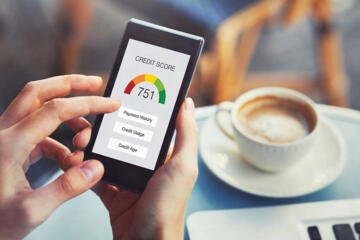
Digital Credit Evolution
Automated loan underwriting is the use of sophisticated software—often powered by Machine Learning (ML) and Artificial Intelligence (AI)—to verify applicant data and determine creditworthiness. Unlike the traditional "loan officer" model of the 1990s, where a human might weigh your character, modern systems like Upstart or Fannie Mae’s Desktop Underwriter (DU) focus on cold, hard data points processed in milliseconds.
Consider a borrower applying for a mortgage through Rocket Mortgage. The system doesn't just look at a FICO score; it pulls real-time data from The Work Number for income verification and uses Plaid to analyze cash flow patterns directly from bank accounts. This eliminates human bias but introduces a new challenge: "algorithmic rigidity," where a single data discrepancy can trigger an instant rejection.
According to recent industry benchmarks, automated systems can reduce the "time to decision" from 20 days to less than 10 minutes. However, statistics from the Consumer Financial Protection Bureau (CFPB) suggest that while speed has increased, nearly 20% of applicants face issues due to incorrect data being pulled by automated aggregators during the "soft pull" phase.
The Role of Alternative Data in 2026
Modern engines now look beyond credit reports. They analyze "residual income"—what you have left after bills—and even your history of utility payments through services like Experian Boost. This is a double-edged sword: it helps those with "thin" credit files but penalizes those with irregular spending habits.
Machine Learning and Pattern Recognition
Algorithms are trained on millions of past loans. If the system sees a pattern—such as an increase in "Buy Now, Pay Later" (BNPL) transactions from providers like Affirm or Klarna—it may flag you as "credit hungry," even if your FICO score remains high. This hidden layer of logic is where many approvals are lost.
Instant Verification vs. Manual Stips
In the past, you provided "stips" (stipulations) like pay stubs. Today, systems use OCR (Optical Character Recognition) to read your tax returns instantly. If the OCR fails to read a blurry PDF, the algorithm might automatically downgrade your application's "confidence score," leading to a higher interest rate or a flat denial.
Thresholds and Hard Stops
Algorithms work on "hard stops." If a lender’s Debt-to-Income (DTI) limit is 43%, and your automated calculation comes in at 43.1%, there is no human to "make an exception." Understanding these rigid boundaries is essential for the modern applicant.
The Impact of Geolocation and Industry Risks
Some advanced underwriting models incorporate macro-economic data. If the system detects you work in a sector currently experiencing volatility (like certain niches in tech or retail), the algorithm may tighten the approval criteria for your specific application without you ever knowing why.
System Friction Points
The primary reason for unexpected rejections in an automated environment is "Data Fragmentation." When your information is stored differently across various bureaus—Equifax, TransUnion, and Experian—the algorithm may perceive inconsistencies as fraud or high risk. A misspelled address or a transposed digit in a phone number can lower your "Identity Verification" score, a metric most borrowers don't even know exists.
Another major pain point is the "Cash Flow Shock" analysis. Algorithms are programmed to look for sudden changes. If you deposit a large sum of cash (e.g., a gift from a relative) right before applying for a loan, the system may flag it as "unseasoned funds." Without a manual underwriter to explain this to, the system may simply exclude that capital from your assets, causing you to fail the "Reserve Requirement" check.
The consequences are significant. An automated rejection often triggers a "Hard Inquiry" on your credit report, lowering your score for the next attempt. Furthermore, being rejected by an automated system can land you in a "high-risk" pool for that specific lender for 6 to 12 months, preventing you from reapplying even if your financial situation improves next week.
Real-life situation: A freelancer with a $150,000 annual income might be rejected by a SoFi or Marcus by Goldman Sachs automated engine because their income is lumpy. The system sees $0 one month and $40,000 the next, concludes the income is "unstable," and denies the loan, whereas a human would see the year-over-year growth and approve it.
Approval Optimization
To win in a world of automated underwriting, you must treat your financial profile like an SEO project. You are optimizing for an algorithm, not a person. This requires precision, timing, and data hygiene.
1. Standardize Your Digital Footprint
Ensure your name, address, and employer information are identical across all platforms. Check your LexisNexis Consumer Disclosure report. This "shadow credit report" is used by many automated systems to verify your identity. If the data here is messy, your approval odds plummet before your credit score is even checked.
Tool: Request your free annual report from LexisNexis to check for data "noise."
2. Manage Your Debt-to-Income (DTI) Ratio Aggressively
Automated systems calculate DTI based on your "minimum monthly payments" shown on credit reports. To boost your odds, pay down high-interest credit cards at least 30 days before applying. This ensures the "Statement Balance" reported to the bureaus is low, giving the algorithm a cleaner DTI calculation. Aim for a DTI below 36% for the highest "Auto-Approve" triggers.
Fact: Borrowers with a DTI under 30% are 5x more likely to receive an instant "Clear to Close" in mortgage underwriting.
3. Stabilize Cash Flow 60 Days Out
Avoid any large, unexplained transfers in or out of your primary accounts. Systems using Finicity or Plaid look for "Monthly Net Surplus." If you have high subscriptions or frequent gambling transactions (even small ones), the algorithm may categorize you as a "high-variance" borrower.
Action: Clean up your bank statements two months prior to application to present a "boring" but stable cash flow profile.
4. Leverage Credit "Boosters" Strategically
If your score is on the edge of a tier (e.g., 678 when you need 680), use Experian Boost or Self.inc to report rent and utility payments. In automated underwriting, hitting a specific "Tier 1" or "Tier 2" bracket can mean the difference between a 7% and a 12% interest rate.
Result: Moving up just one credit tier can save the average borrower $3,500 over the life of a $25,000 personal loan.
5. Optimize the Loan Purpose Selection
Algorithms often have different risk weights for different loan purposes. "Debt Consolidation" is often viewed more favorably than "Home Improvement" or "Major Purchase" because the system sees it as reducing your overall monthly burden. Be honest, but understand that the "Purpose" field is a major variable in the approval formula.
Real-World Case Examples
Case Study 1: The Small Business Owner
Company/Person: "Alex," a self-employed graphic designer.
Problem: Denied by a major bank's automated portal for a $50,000 business loan despite having $200,000 in the bank. The system couldn't verify "Consistent Payroll."
Action: Alex used Novo (a digital business bank) and connected his QuickBooks Online directly to the lender's API. This allowed the algorithm to see "Profit and Loss" data rather than just bank balances.
Result: Approved in 48 hours with a 1.5% lower interest rate than the initial manual quote.
Case Study 2: The First-Time Homebuyer
Company/Person: "Sarah," a nurse with high student debt.
Problem: Algorithmic "Hard Stop" on DTI at 45%.
Action: Sarah used a "Credit Simulator" tool provided by MyFICO to identify that paying off a $1,200 car loan would drop her DTI to 42.8%.
Result: The automated system triggered an "Approve/Eligible" status immediately after the credit report updated, securing her a 30-year fixed mortgage.
Underwriting Platforms
| Platform / Tool | Primary Use Case | Key Factor it Analyzes | Borrower Benefit |
|---|---|---|---|
| Fannie Mae DU | Mortgages | LTV & Reserve Assets | Standardized, predictable rules. |
| Upstart AI | Personal Loans | Education & Work History | Higher approval for "thin" credit. |
| Plaid | Income Verification | Real-time Cash Flow | No need for manual pay stubs. |
| Zest AI | Auto/Credit Cards | Machine Learning Patterns | Faster "Instant" approvals. |
Common Pitfalls to Avoid
The biggest mistake borrowers make is "Application Spamming." When an automated system denies you, don't immediately apply to three other lenders. Many lenders use the same backend service providers (like Encompass or TurnKey Lender). If one algorithm flags you for a specific reason, the others likely will too. Instead, wait for the "Adverse Action Notice"—a legal document the lender must send explaining why you were denied.
Another error is ignoring "The Delta." This is the difference between what you claim on your application and what the automated verification pulls from IRS Transcripts. If you state your income is $80,000 but your tax transcripts show $78,500, the algorithm may flag this as "Material Misrepresentation." Always use the exact figures from your most recent tax filings or W-2s, not "rounded" estimates.
Finally, avoid opening new credit lines (like a 0% interest furniture store card) within 90 days of a major loan application. Automated systems are programmed to detect "Inquiry Clusters," which are interpreted as a sign of financial distress, even if you are just shopping for a new sofa.
FAQ
Does a human ever see my application?
In many digital-first lenders, a human only sees the application if the algorithm finds a "gray area." If you fall well within or well outside the parameters, the decision is 100% automated. This is known as "Straight-Through Processing" (STP).
Can I "appeal" an automated rejection?
Yes, but it is difficult. You must request a "Manual Underwrite." Not all lenders offer this, as it is more expensive for them. Smaller credit unions are more likely to offer manual overrides than large national banks or fintechs.
Why did my score drop after an automated denial?
The denial itself doesn't drop your score, but the "Hard Inquiry" performed by the algorithm to make the decision does. Usually, this is a 5–10 point hit. Multiple inquiries in a short window for the same loan type (like mortgages) are usually grouped as one.
Does my social media affect the algorithm?
In the United States, current regulations generally prevent lenders from using social media for credit scoring. However, algorithms do use "Public Records," which include any legal filings, bankruptcies, or liens that appear in digital databases.
Is automated underwriting biased?
While designed to be objective, algorithms can inherit "proxy biases" from the data they are trained on. Regulators are currently scrutinizing AI models to ensure they don't unfairly penalize certain demographics based on zip codes or educational backgrounds.
Author’s Insight
In my years of observing the fintech space, I’ve seen that the most successful borrowers are those who treat their financial data with "surgical precision." The shift to automation means you no longer have to "dress up" for a bank meeting, but you do have to ensure your digital data is spotless. My best advice is to pull your own comprehensive credit report (not just the summary from a free app) three months before any major application. If you can see what the algorithm sees before it sees it, you hold all the cards.
Summary
Automated loan underwriting is a powerful tool that offers speed and accessibility, but it demands a higher level of data accuracy from borrowers. To maximize your approval odds, focus on standardizing your personal information, maintaining a low and stable DTI, and ensuring your bank statements reflect consistent financial behavior. By "pre-clearing" your data of inconsistencies and using tools like LexisNexis or Experian Boost, you can navigate the algorithmic landscape with confidence. Before your next application, take a month to clean your digital footprint—it is the single most effective way to turn a "Denied" into an "Approved."