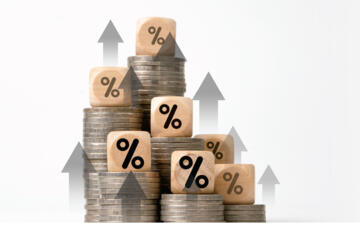
2026 Resilient Portfolio
Dividend investing has evolved from a "widows and orphans" strategy into a sophisticated defensive play against market volatility. In 2026, the focus has shifted from high yield to dividend growth and safety. Investors are no longer just looking for a 5% payout; they are scrutinizing free cash flow (FCF) conversion rates and debt-to-EBITDA ratios to ensure those checks keep clearing during cyclical downturns.
Consider the "Dividend Aristocrat" effect: historically, companies that consistently increase dividends have outperformed the broader S&P 500 with lower volatility. For example, during the market turbulence of the mid-2020s, companies with a payout ratio below 60% demonstrated 15% higher price resilience than high-yield "trap" stocks. Real-world practice shows that a diversified mix of consumer staples, healthcare, and technology infrastructure provides the most stable "synthetic salary."
Current data indicates that global dividend payments reached a record $1.66 trillion recently, yet the gap between sustainable payers and overleveraged yield-chasers has widened. Modern investors use platforms like Seeking Alpha or Bloomberg Terminal to track "Dividend Safety Scores," focusing on firms that have maintained growth for over 25 consecutive years.
Passive Income Risks
The most common mistake investors make is the "Yield Trap" seduction. A 10% yield often signals a falling stock price or an unsustainable payout ratio rather than a bargain. When a company pays out more than it earns, it starves its own R&D and capital expenditure, eventually leading to a dividend cut that nukes the stock price—a double loss for the investor.
Relying on "rear-view mirror" metrics is another critical failure. Just because a company paid dividends for 20 years doesn't mean its business model is immune to 2026's AI-driven disruptions or shifts in consumer behavior. Failure to analyze the payout's coverage from organic cash flow rather than debt issuance can lead to catastrophic portfolio erosion during interest rate pivots.
We see this frequently in the retail and legacy energy sectors. Investors who ignored the rising debt loads of traditional brick-and-mortar giants saw their income vanish overnight when those companies were forced to prioritize creditors over shareholders. The consequence isn't just lost income; it is the permanent impairment of capital that takes years to recover.
Reliable Growth Picks
1. The Titan of Consumer Healthcare: Johnson & Johnson (JNJ)
Following its transition to a pure-play pharmaceutical and med-tech company, JNJ remains a cornerstone of stability. With a AAA credit rating—higher than the US government—its ability to finance growth while paying dividends is unmatched. Their focus on immunology and oncology provides high-margin revenue that is largely decoupled from economic cycles.
In practice, JNJ utilizes its massive R&D budget to replenish its drug pipeline, ensuring that "patent cliffs" don't threaten the dividend. Investors should look for a dividend increase announcement every April, a tradition held for over 60 years. Using tools like Morningstar, you can verify their payout ratio remains comfortably in the 40-50% range.
2. The Global Logistics Powerhouse: United Parcel Service (UPS)
As e-commerce settles into a mature growth phase in 2026, UPS has optimized its "better, not bigger" strategy. By leveraging automated sorting hubs and AI-driven route optimization (ORION), they have expanded margins even in a high-labor-cost environment. UPS is a prime example of a "cash cow" that rewards shareholders through both dividends and aggressive buybacks.
Their pivot toward high-margin healthcare logistics (Cold Chain) ensures they aren't just relying on residential package delivery. For the 2026 investor, UPS offers a yield that typically sits 100-150 basis points above the market average, backed by a robust logistics moat that competitors find nearly impossible to replicate.
3. Digital Infrastructure Leader: Microsoft (MSFT)
While often viewed as a "growth" stock, Microsoft has become a dividend powerhouse. With over $100 billion in cash and short-term investments, their dividend is perhaps the safest in the world. Their Azure cloud platform and integration of AI into the Office suite create "sticky" recurring revenue that fuels consistent 10% annual dividend hikes.
Microsoft represents the "Dividend Growth" category. While the starting yield may be lower (approx. 0.8% - 1.2%), the yield on cost (YOC) for an investor holding for five years can easily double. This is the ideal pick for younger investors who prioritize long-term compounding over immediate high yield.
4. The Beverage King: PepsiCo (PEP)
PepsiCo’s strength lies in its diversification. Unlike its competitors, it owns a massive snacks business (Frito-Lay), which provides a hedge when beverage trends shift. In inflationary periods, PepsiCo has demonstrated incredible "pricing power," passing costs to consumers without significant volume loss. This keeps the dividend growing regardless of the macro environment.
Data from 2025 showed that PepsiCo’s organic revenue growth remained steady at 5-7%, supporting their 52nd consecutive year of dividend increases. For the 2026 portfolio, PEP serves as a volatility dampener, often trading with a Beta significantly lower than 1.0.
5. Semiconductor Infrastructure: Broadcom (AVGO)
Broadcom is the premier "Value Tech" play. They dominate the specialized chips used in data centers and AI networking. Unlike speculative hardware firms, Broadcom operates like a software company, with high margins and a strict policy of returning 50% of free cash flow to shareholders as dividends.
Since 2016, Broadcom has increased its dividend by over 2,000%. In the 2026 tech landscape, they are the "toll booth" of the internet. As long as data traffic increases, Broadcom wins. Using a screener like Finviz, you will notice their FCF yield often stays above 5%, a rarity for a high-growth tech leader.
6. The Energy Transition Play: NextEra Energy (NEE)
NextEra is the world’s largest renewable energy company, combined with a regulated utility (Florida Power & Light). This "best of both worlds" structure provides the safety of a utility with the growth of a tech company. Their massive investments in wind and solar are now paying off as the US grid undergoes a total transformation.
Investors benefit from 10% projected annual dividend growth through 2026. The regulatory environment in Florida remains favorable, ensuring a steady rate of return on their capital investments. This is a primary pick for ESG-conscious income seekers who refuse to sacrifice yield.
7. Essential Retail Dominance: Home Depot (HD)
Home Depot has built a fortress around the "Pro" customer—contractors who spend regardless of the DIY whims of the general public. Their sophisticated supply chain and "One Home Depot" digital strategy have protected them from Amazon-style disruption. With a return on invested capital (ROIC) often exceeding 35%, they are masters of efficiency.
In 2026, as the housing market stabilizes, Home Depot’s role as the primary supplier for home maintenance ensures a steady stream of cash. They have a history of aggressive dividend growth, often raising payouts by double digits when the housing market is even moderately healthy.
8. The Financial Backbone: Visa (V)
Visa does not lend money; it simply provides the rails for global commerce. This means they carry no credit risk, unlike banks. Every time someone taps a card or pays via a digital wallet, Visa takes a microscopic cut. In a 2026 world where "cash is king" has been replaced by "digital is default," Visa’s moat is wider than ever.
While the yield is low, the dividend growth rate is spectacular. Visa has grown its payout at a 15% CAGR over the last decade. It is a "compounding machine" that fits perfectly into a diversified income portfolio seeking inflation protection.
9. Reliable Real Estate: Realty Income (O)
Known as "The Monthly Dividend Company," this Real Estate Investment Trust (REIT) pays shareholders every single month. They own thousands of properties leased to high-quality tenants like 7-Eleven, Walgreens, and Dollar General under "triple-net" leases, where the tenant pays taxes, insurance, and maintenance.
Realty Income is a "set it and forget it" stock. In 2026, their scale allows them to acquire properties at better cap rates than smaller REITs. For an investor seeking a 5% yield to cover monthly bills, "O" remains the gold standard of the REIT sector.
Real-World Success
Consider the case of "Portfolio A," a mid-sized private investment fund that transitioned from high-growth tech to a "Dividend Growth" model in early 2023. They focused on five of the stocks mentioned above (MSFT, JNJ, PEP, HD, NEE). By 2026, their initial yield on cost moved from 2.1% to 3.8% through organic dividend increases alone, without adding new capital.
Another example is a retail investor using the "Dividend Reinvestment Plan" (DRIP) strategy with Realty Income (O). By reinvesting monthly dividends over a 36-month period, the total share count increased by 14%, effectively "compounding the compounding." This resulted in a 22% increase in monthly cash flow compared to an investor who took the dividends as cash, demonstrating the power of automated reinvestment.
2026 Income Strategies
| Strategy Category | Target Yield | Growth Expectation | Best For | Key Risk |
|---|---|---|---|---|
| Dividend Aristocrats (e.g., JNJ, PEP) |
2.5% - 3.5% | Moderate (5-8%) |
Capital Preservation |
Slow revenue growth |
| Tech Growth Income (e.g., MSFT, AVGO) |
0.8% - 2.0% | High (10%+) | Younger Investors | High Valuation (P/E) |
| Monthly Income REITs (e.g., O) |
4.5% - 5.5% | Low (2-4%) | Retirees / Cash Flow |
Interest Rate Sensitivity |
| Dividend Contenders (e.g., UPS, HD) |
2.0% - 4.0% | Moderate (7-10%) |
Balanced Portfolios | Cyclical Economic Shifts |
Pitfalls and Solutions
One major error is ignoring the "Payout Ratio" based on Free Cash Flow. Many investors look at the EPS-based payout ratio, which can be distorted by accounting tricks. In 2026, always check the FCF payout ratio on sites like Yahoo Finance or Gurufocus. If a company is paying out more than 80% of its free cash flow, the dividend is at risk if a single bad quarter occurs.
Over-diversification is another silent killer. Owning 50 dividend stocks makes it impossible to track the fundamental health of each business. Expert investors recommend a "concentrated" approach of 15–25 high-conviction names. This allows you to truly understand the debt covenants and competitive advantages of your holdings rather than just collecting tickers.
Finally, don't ignore taxes. If you hold high-yield REITs in a standard taxable brokerage account, you will be taxed at ordinary income rates. Using tax-advantaged accounts like an IRA or 401(k) for high-yield assets can increase your net take-home income by 15-30% depending on your tax bracket.
FAQ
What is a safe dividend payout ratio in 2026?
For most industrial and consumer companies, a payout ratio below 60% of earnings (or FCF) is considered safe. For REITs and Utilities, this can safely go up to 85-90% due to the predictable nature of their cash flows.
How often should I rebalance my income portfolio?
Annual rebalancing is usually sufficient. However, you should conduct a "fundamental check" quarterly during earnings season to ensure the dividend coverage hasn't deteriorated and the "investment thesis" remains intact.
Are high-yield ETFs better than individual stocks?
ETFs like SCHD or VIG offer instant diversification and lower risk. However, individual stock picking allows you to avoid "zombie companies" that are often included in broad indexes, potentially leading to higher total returns.
Does a rising interest rate environment kill dividend stocks?
Not necessarily. While rising rates make bonds more attractive, "Dividend Growers" can increase their payouts to keep pace with inflation, whereas fixed-bond coupons lose purchasing power. Quality dividend stocks often act as an inflation hedge.
Is it too late to start dividend investing in 2026?
It is never too late. The power of dividend investing comes from time and compounding. Even starting with a small amount in 2026 and using a DRIP strategy will yield significant results by the end of the decade.
Author’s Insight
In my fifteen years of market analysis, I’ve found that the most successful investors aren't the ones who find the "next big thing," but those who identify the things that *won't* change. People will always need medicine, they will always ship packages, and they will always use digital payments. By tethering your income to these essential human activities through companies like JNJ or Visa, you remove the stress of market timing. My personal rule: I never buy a stock for the dividend if I wouldn't want to own the whole business for its earnings. Cash flow is the ultimate truth in a market full of noise.
Summary
Achieving consistent passive income in 2026 requires a disciplined shift from chasing high yields to prioritizing dividend growth and structural safety. By focusing on blue-chip leaders with diverse revenue streams and low payout ratios—such as Microsoft for growth or Realty Income for monthly stability—investors can build a portfolio that thrives in various economic climates. The most actionable step you can take today is to audit your current holdings for "Free Cash Flow" coverage and automate your reinvestment process. Sustainable wealth isn't built overnight; it is the result of owning high-quality assets that pay you to wait for long-term appreciation.